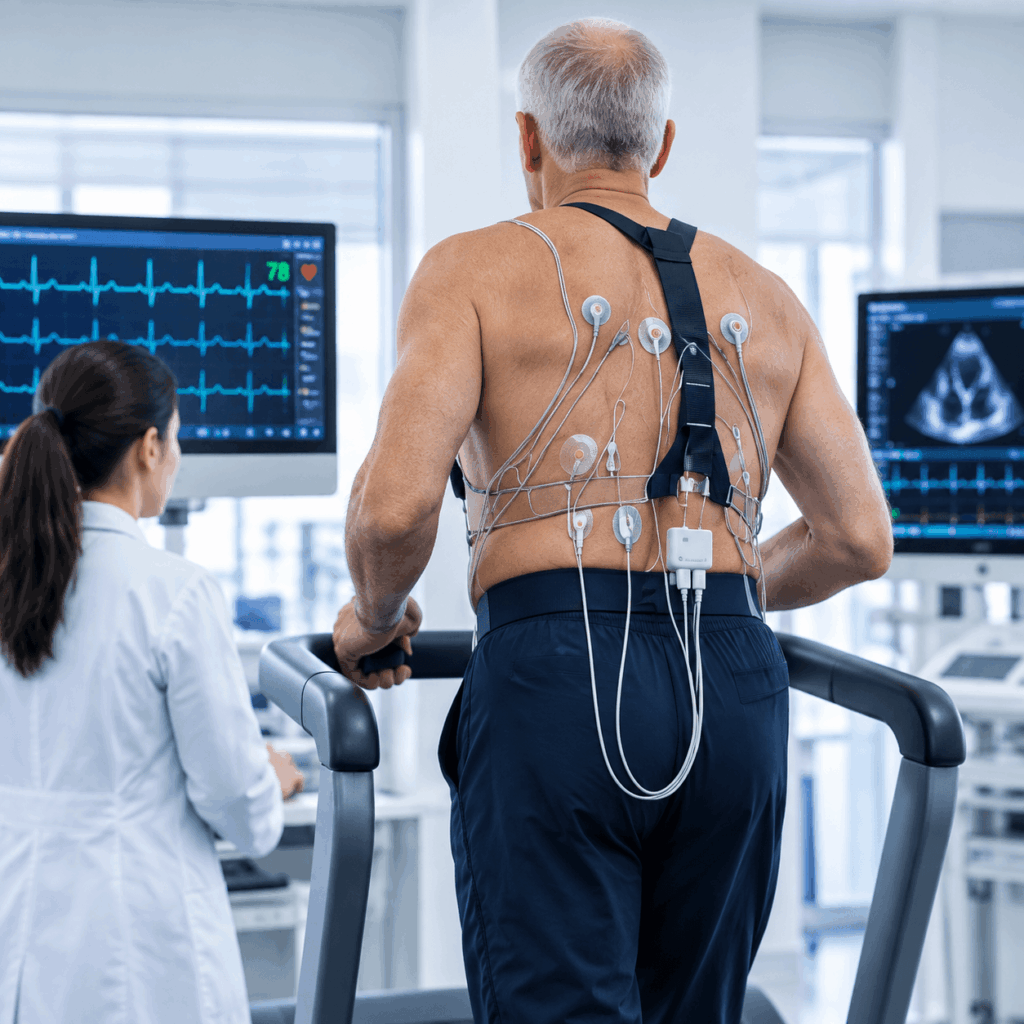
Stress Testing
This test is noninvasive, generally safe and painless. It may be administered in a number of different settings, including clinics, hospitals or physician’s offices. Exercise stress tests may be performed with echocardiography or nuclear imaging techniques. Another type of stress test uses drugs instead of physical activity to produce the effects of exercise during the examination.
A physician may recommend an exercise stress test for a number of reasons:
- To diagnose conditions such as coronary artery disease (a chronic disease in which there is a “hardening” or atherosclerosis of the arteries) in patients with chest pain.
- To diagnose a heart-related cause of symptoms such as chest pain, shortness of breath or lightheadedness.
- To determine a safe level of exercise among heart patients who wish to increase their level of physical activity.
- To screen for coronary artery disease in some patients who do not have symptoms.
- To gauge exercise capacity in heart failure patients who are being considered for a heart transplant.
- To evaluate the effectiveness of a balloon angioplasty (a procedure in which plaque in the arteries is pushed back against the artery walls to make more room for blood flow), or other procedures.
- To predict future risk of dangerous heart-related conditions, such as heart attack.